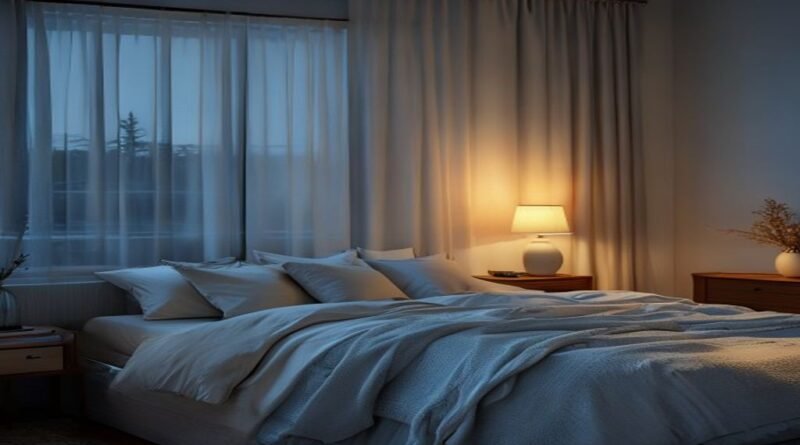
The Science of Better Sleep: What Really Happens When the Lights Go Out
Americans love to optimize. We track our steps, our screen time, our savings rates. Yet the one activity that occupies roughly a third of our lives often gets treated as an afterthought, something to be trimmed when the calendar gets crowded. Sleep researchers have spent decades making the opposite case: rest is not the absence of productivity but the foundation of it. Understanding what actually happens after you turn out the lights may be the best motivation to protect those hours.
Your Brain on Night Shift
Sleep unfolds in cycles, each lasting roughly ninety minutes and moving through lighter stages, deep slow-wave sleep, and REM sleep, the stage most associated with vivid dreaming. Each phase appears to serve a different purpose. Deep sleep is widely understood to support physical restoration and the consolidation of memories, while REM sleep is linked to emotional processing and creative problem-solving. This is one reason a full night matters more than a few fragmented hours: cut sleep short and you disproportionately lose the later cycles, which are richer in REM.
The brain is also surprisingly busy with housekeeping. Scientists have described systems that appear to help clear metabolic byproducts from the brain during sleep, a kind of overnight rinse cycle. While research is ongoing, the broad consensus is clear: consistent, sufficient sleep supports attention, mood, immune function, and long-term health, while chronic sleep deprivation works against all of them.
The Rhythm You Cannot Cheat
At the center of it all sits the circadian rhythm, an internal clock that runs on a roughly twenty-four-hour loop and takes its strongest cues from light. Morning sunlight tells the brain to be alert; darkness signals the release of melatonin, the hormone that helps usher in sleepiness. Modern life scrambles those signals constantly. We spend our days indoors under dim artificial light, then flood our eyes with bright screens at midnight, effectively telling the body it is perpetually late afternoon.
The fix is less about gadgets and more about consistency. Sleep specialists commonly recommend waking at the same time every day, including weekends, because a stable wake time anchors the entire rhythm. Getting outside within an hour of waking, even on a cloudy day, gives the clock a strong, honest cue. In the evening, dimming lights and easing off screens for the last hour tells the body the day is genuinely winding down.
Habits That Actually Move the Needle
Sleep advice can feel like an avalanche of rules, but a handful of habits do most of the heavy lifting. Consider them a starting lineup rather than a rigid prescription:
- Keep the bedroom cool, dark, and quiet; many experts suggest temperatures in the mid-sixties Fahrenheit feel right for most sleepers.
- Reserve caffeine for the morning hours, since it can linger in the body well into the evening.
- Treat alcohol with skepticism as a sleep aid; it may help you fall asleep faster but tends to fragment the second half of the night.
- Move your body daily, though finishing intense workouts a few hours before bed suits most people better.
- If you cannot sleep after twenty minutes or so, get up and do something calm and boring in low light rather than lying in bed frustrated.
That last point matters more than it seems. The bed should be a place the brain associates with sleep, not with tossing, scrolling, or spreadsheet-fueled worry. Behavioral approaches built on this principle, including cognitive behavioral therapy for insomnia, are considered a first-line treatment for chronic sleep trouble, often preferred before medication.
Rethinking the Badge of Honor
The person who brags about getting by on five hours is usually describing a debt, not a talent.
American work culture has long romanticized sleeplessness, treating exhaustion as proof of ambition. The science tells a humbler story. Most adults appear to function best on roughly seven to nine hours, and true short sleepers, people genetically wired to thrive on less, are believed to be rare. What is common is adaptation: after a while, sleep-deprived people stop noticing how impaired they are, even as reaction time, judgment, and patience quietly erode.
The encouraging news is that sleep responds to attention the way a garden responds to water. Pick a wake time and hold it. Get morning light. Cut the late caffeine. Give yourself a wind-down ritual you actually enjoy, whether that is a paperback, gentle stretching, or ten minutes of tomorrow’s to-do list dumped onto paper so your brain can stop rehearsing it. Small, boring, repeatable actions beat elaborate overhauls almost every time.
One caveat deserves emphasis. Persistent insomnia, loud snoring with gasping or pauses in breathing, or crushing daytime sleepiness are not problems to white-knuckle through with better habits alone. These can signal conditions such as sleep apnea that deserve a professional evaluation, so talk with a doctor or a sleep specialist if they sound familiar. For everyone else, the prescription is refreshingly old-fashioned: respect the clock you were born with, and let the night do its quiet, essential work.
