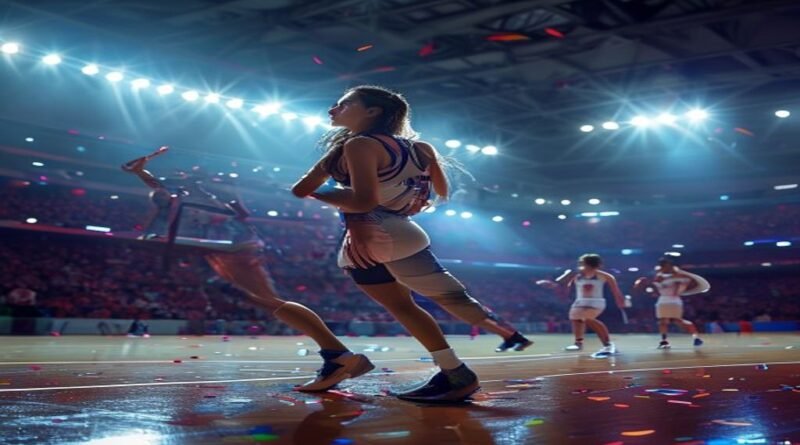
No Longer a Sideshow: The Rise of Women’s Professional Sports in America
There is a moment familiar to anyone who has followed women’s sports in America over the past decade: the moment the ticket sells out. The arena that skeptics said would never fill, fills. The broadcast that networks buried in an afternoon slot draws an audience nobody projected. Again and again, the supposed ceiling on women’s professional sports has turned out to be less a law of nature than a failure of imagination, and American sports business is finally acting on that discovery.
The Long Foundation
The current boom did not come from nowhere. Its foundation was poured in 1972, when Title IX required schools receiving federal funds to provide equal athletic opportunity. The law’s effect compounded over generations: girls who gained access to high school sports became collegiate athletes, then coaches, then mothers of athletes, then executives and investors. Each generation entered a system slightly more open than the last.
The professional layer took longer. Early women’s leagues often operated on survival budgets, with athletes working second jobs, flying commercial, and playing overseas in the offseason to make a living. What kept those leagues alive was not revenue but conviction, a core of players and fans who believed the product deserved a future. That conviction, it turns out, was an asset waiting for capital.
The Flywheel Finally Spins
Sports economists describe a flywheel that drives every successful league: visibility creates fans, fans create revenue, revenue improves the product, and a better product earns more visibility. For decades, women’s sports were locked out of the first step. Games were rarely televised, and then their low ratings, on channels few could find, were cited as proof that no one wanted to watch.
What changed was distribution and investment arriving at the same time. Streaming platforms and social media let athletes and leagues reach audiences without begging for broadcast windows. Star players built massive followings that traveled with them from college to the pros. Meanwhile, institutional investors, celebrity owners, and sovereign sports capital began treating women’s franchises as undervalued assets rather than charity. Franchise valuations in several women’s leagues have multiplied in just a few years, and expansion cities now compete for teams with the eagerness once reserved for men’s leagues.
- Media rights deals for women’s leagues have grown dramatically, funding better salaries and facilities.
- Attendance records across basketball, soccer, softball, and volleyball keep falling season after season.
- Dedicated training facilities, once unheard of, are becoming a standard franchise investment.
- Women’s sports merchandise, long an afterthought, has become one of retail’s fastest-growing categories.
More Than a Market Story
It would be a mistake, though, to tell this story purely in business terms. The rise of women’s professional sports is also a cultural renegotiation of who gets to be a public athlete in America. Today’s stars are unapologetically visible in ways earlier generations were discouraged from being: outspoken on labor issues, candid about motherhood and mental health, central to fashion and advertising campaigns that once ignored them.
The question was never whether women could play at the highest level. The question was whether America would build the infrastructure to watch them do it.
The players themselves have driven much of the progress through organized labor. Collective bargaining fights in women’s soccer and basketball produced landmark agreements on pay, travel standards, and family benefits, victories that reset expectations across all of women’s athletics. Younger athletes now arrive in professional leagues assuming rights their predecessors had to strike, sue, and negotiate into existence.
The Unfinished Business
For all the momentum, the gap remains real. Salaries in most women’s leagues are still a fraction of their men’s counterparts. Coverage, while growing, remains a small share of total sports media. Some franchises thrive while others still scrape. And the boom is being tested by its own growth: rapid expansion demands deeper talent pools, bigger front offices, and patient capital that does not flee at the first flat quarter.
History offers a useful caution here. American sports leagues, men’s leagues included, took decades of failures, mergers, and near-bankruptcies before achieving stability. Measured against that timeline, women’s professional sports are not late. They are early, and moving faster than their predecessors did.
What Comes Next
The most telling indicator of the future may be the youngest fans. Arenas for women’s games are filled with girls wearing the jerseys of their heroes, but also with boys who see nothing unusual about it, and that normalcy is the revolution completing itself. A generation is growing up for whom a professional female athlete is not an exception or a cause but simply a star.
Every era of American sports has a defining growth story, the rise of professional football, the globalization of basketball, the cable-television money boom. The defining growth story of this era is unfolding in women’s locker rooms and expansion drafts across the country. The sideshow era is over. What remains is the ordinary, extraordinary work of building institutions that last.
