
Dust, Wristbands, and Transcendence: Inside the American Music Festival Experience
Somewhere in America nearly every summer weekend, a temporary city rises from a fairground, a farm, or a desert flat. Its citizens arrive by the tens of thousands, wearing wristbands instead of passports, hauling tents and sunscreen and a shared conviction that the next few days will be worth every discomfort. By Monday the city vanishes, leaving flattened grass and a caravan of exhausted, sunburned people who insist, against all sensory evidence, that they have just had one of the best weekends of their lives. This is the American music festival, and it has become one of the country’s most durable cultural rituals.
From Counterculture to Main Street
The modern festival descends from the legendary gatherings of the late sixties, when outdoor concerts became synonymous with a generation’s identity. For decades afterward, festivals remained countercultural events, muddy and chaotic and proudly outside the mainstream. The transformation came gradually: touring festivals of the nineties proved the model could travel, and the rise of destination festivals in the two thousands proved it could be polished. What was once a pilgrimage for devotees became a bucket-list item for accountants, nurses, and college students alike.
Today the festival landscape spans every genre and geography. Country fans gather in Midwestern fields, jam bands summon devoted followings to mountain amphitheaters, electronic music takes over speedways, and jazz, folk, and hip-hop each sustain their own circuits. The common thread is no longer a genre or an ideology. It is the format itself: many artists, several days, one enclosed world.
The Anatomy of a Perfect Festival Day
Ask veterans what keeps them coming back and they rarely lead with the headliners. The magic lives in the texture of the day, a rhythm that repeats across every festival in the country:
- The morning walk through the campgrounds, where strangers offer coffee and last night’s stories become communal legend.
- The early afternoon discovery set, when a band you have never heard of plays to two hundred people and becomes your favorite act by the third song.
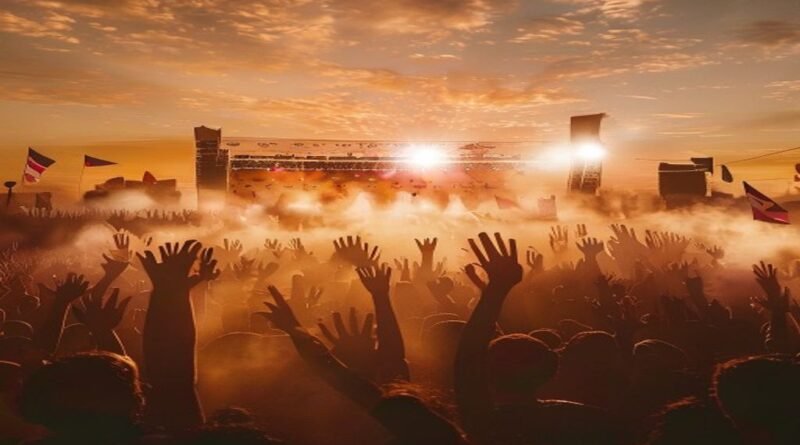
- The golden hour, when the light turns amber, the crowd swells, and the whole grounds seem to inhale at once.
- The headline performance, less a concert than a mass ceremony, fireworks optional but goosebumps guaranteed.
Between those landmarks stretch the small ordeals that, oddly, make the memory stick: the water lines, the drum circle at three in the morning, the porta-potty diplomacy. Psychologists who study happiness note that shared mild adversity bonds people faster than shared comfort, and the festival may be the entertainment industry’s most efficient machine for producing exactly that.
An Economy Built on a Weekend
The festival is also serious business. A single major event can pump hundreds of millions of dollars into a regional economy, filling hotels, hiring thousands of temporary workers, and turning small towns into household names. For artists, festival season has become financially essential in an era when recorded music pays modestly; a strong festival run can anchor a touring year and introduce an act to audiences far outside its core fan base.
A great festival set can compress five years of career building into fifty minutes, in front of a crowd that arrived curious and leaves converted.
The economics cut both ways. Rising production costs, weather cancellations, and ticket price fatigue have thinned the herd in recent years, and the industry has learned hard lessons about overpromising. The festivals that endure tend to share a trait: they sell an identity, not just a lineup, and their audiences return annually the way families return to a lake house.
The Ritual Beneath the Spectacle
Why does a country with infinite entertainment at home keep choosing dust and crowds? The most convincing answer is that festivals supply something modern life quietly rations: collective effervescence, the sociologist’s term for the electric feeling of moving and singing in unison with thousands of others. Regular attendees describe festivals in language usually reserved for religious retreats, speaking of renewal, belonging, and time outside of time.
The festival also grants permission. Adults who spend fifty weeks a year being professional and composed spend two days in glitter and costume, dancing badly and freely. Phones come out for a song or two, but the deeper appeal is presence, an experience that resists full capture no matter how many clips reach social media. The clips, in fact, function mostly as recruitment posters for next year.
What Endures When the Stage Comes Down
Trends will keep reshaping the form. Comfort is up, with festivals adding shade, seating, wellness areas, and family zones as audiences age alongside their favorite acts. Sustainability pressures are changing everything from cup design to transit planning. But the essential transaction has not changed since the first field filled with music: people gather, art happens, and for a weekend the ordinary rules of American life are suspended.
The temporary city always comes down. The reason it keeps rising again is that its citizens, back in their ordinary lives, remember what it felt like to belong to it, and they start counting the days until the gates reopen.
