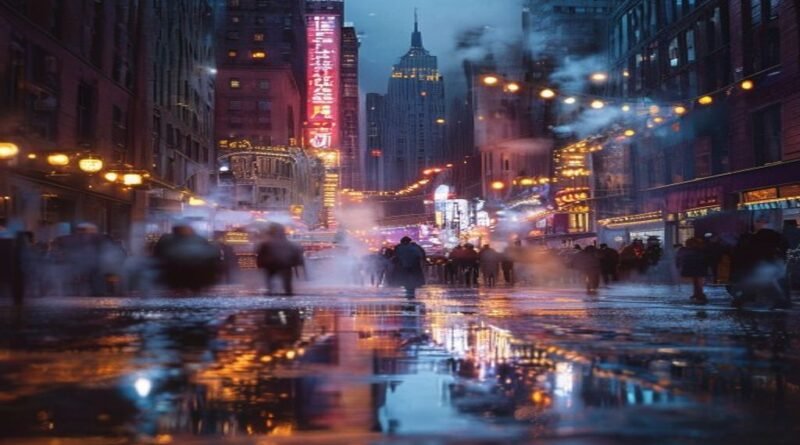
Why Broadway Endures in the Age of the Infinite Screen
The obituary for live theater has been drafted many times. Radio was supposed to finish it. Then movies, then television, then home video, then the smartphone, each arriving with the same prediction: why would anyone pay steep prices to sit in a cramped seat when entertainment streams endlessly into every pocket? And yet, decade after decade, the lights of the Broadway district keep burning. Attendance rebounds after every disruption, tourists plan entire trips around a pair of tickets, and a hit musical remains one of the hardest reservations in American culture. The question worth asking is not whether Broadway will survive the digital age, but why it thrives in it.
The Economics of Scarcity
Part of the answer is beautifully simple: theater is scarce in a world of abundance. A streaming series can be watched by fifty million people simultaneously. A Broadway house holds perhaps fifteen hundred, eight performances a week, and when a show closes, it is gone. That scarcity, which once looked like a fatal limitation, has become theater’s greatest asset. In an economy where digital entertainment is infinitely copied and instantly available, the thing that cannot be copied gains value.
Economists call this the shift toward experience spending, and the numbers bear it out. American consumers increasingly direct discretionary income toward events, travel, and live performance rather than possessions. A night at the theater sits squarely at the center of that trend, offering not just a story but an occasion: dinner beforehand, the hush as the houselights dim, the shared gasp of a thousand strangers.
The Thing a Screen Cannot Do
Live performance offers something no algorithm can replicate: risk. The actor might stumble or soar. The understudy might deliver the performance of a lifetime. The audience is not watching a finished product but participating in an event that has never happened before and never will again in quite the same way.
A recording captures what a performance was. A live show is what a performance is, unfolding in real time, with the audience as a silent collaborator.
This is why theatergoers describe favorite performances with the reverence others reserve for weddings or ballgames. Presence changes the experience. Laughter is louder in a crowd. Silence is heavier. Applause, that ancient technology, remains the most direct feedback loop in entertainment, and performers adjust to it nightly, making every audience a co-author of the show it sees.
How the Digital Age Became Broadway’s Ally
Rather than destroying the theater, digital culture has become its most effective marketing department. Consider the ways the two now feed each other:
- Cast recordings and clips circulate on social platforms, turning show tunes into viral phenomena and introducing musicals to teenagers thousands of miles from any stage door.
- Filmed productions and pro-shot captures serve as advertisements rather than replacements, with research consistently showing that people who watch theater on screens become more likely to buy tickets, not less.
- Fan communities dissect casting news, bootleg choreography tutorials, and lyric analyses online, sustaining enthusiasm between visits.
- Digital lotteries and mobile rush tickets have opened seats to younger and less affluent audiences who once assumed Broadway was closed to them.
Meanwhile, the traffic flows both ways. Hollywood stars seeking artistic credibility take limited Broadway runs, driving enormous box office. Screen franchises are adapted for the stage, and stage hits are adapted for the screen, each version promoting the other in a loop that would have seemed impossible when the two industries considered themselves rivals.
An Art Form That Absorbs Everything
Broadway’s deeper survival skill is absorption. The form has never stood still. It swallowed jazz in the twenties, rock in the sixties, and hip-hop in the last decade, each time scandalizing purists and then minting classics. Stagecraft has absorbed technology, too: projection mapping, automated sets, and immersive sound design now share the stage with the oldest tools in the business, a human voice and a spotlight. The theater does not compete with the digital age by rejecting it; it competes by metabolizing it.
Regional theaters and touring productions extend that vitality far beyond a few blocks of Manhattan. For most Americans, Broadway arrives by bus and truck at a performing arts center in Des Moines or Charlotte, and those tours now generate audiences and revenue rivaling New York itself, seeding the next generation of performers, writers, and ticket buyers.
The Oldest Technology Is Presence
None of this means the theater faces no challenges. Production costs keep climbing, premium pricing tests the loyalty of even devoted fans, and the industry still works to make its stages and its audiences reflect the full breadth of the country. But these are the problems of a living art form, not a dying one.
Every era gets the Broadway it needs. In an age of screens, what audiences apparently need is the one entertainment that requires them to show up, sit close to strangers, put the phone away, and feel something together. That need is not going anywhere. Neither, it seems, is Broadway.
