
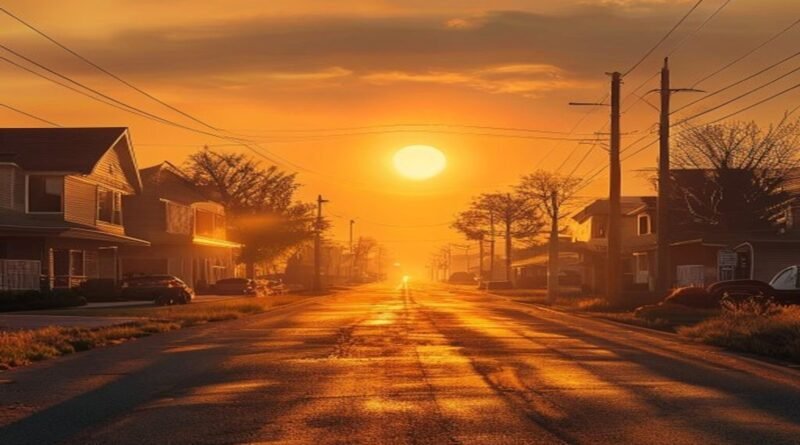
When Night Brings No Relief: America’s Summer Under the Heat Dome
There is a particular sound to an American summer under a heat dome: the low, constant hum of air conditioners running past midnight, in cities where the temperature refuses to fall even after the sun does. That hum is the soundtrack of July 2026. A sprawling ridge of high pressure has parked itself over the middle of the country, threatening roughly two-thirds of the continental United States with punishing heat, according to a forecast reported by the Insurance Journal — and it arrives just weeks after an earlier heat wave that turned deadly across the East.
Heat is the quietest of natural disasters. It topples no buildings and leaves no debris fields, which is precisely why it is so easy to underestimate — and why, year after year, it kills more Americans than hurricanes, floods or tornadoes. This summer is offering a hard refresher course in taking it seriously.
A Dome Two-Thirds of a Country Wide
The current heat dome is centered on the Southwest, the Great Plains and the Dakotas, where triple-digit highs are forecast, before the hot air mass spreads eastward. The Insurance Journal reported forecasts of 111°F in Nevada, readings above 95°F as far north as Helena, Montana, and temperatures surpassing 100°F in the Dakotas — conditions meteorologists described as among the strongest heat events to affect the Dakotas in 25 years. Across many areas, temperatures are running 15 to 25 degrees above normal, and the National Weather Service expected more than 90 local temperature records to be tied or broken.
Most sobering is the forecast’s fine print: this is not a two-day spike but a siege, expected to persist for a week or more. Along the southeastern coast, overnight lows may not drop below 80°F — and that detail matters more than any daytime record.
Why the Night Is the Dangerous Part
The human body is a resilient machine, but it needs recovery time. When nights stay hot, that recovery never comes; heat stress compounds day after day, which is when hospitalizations climb.
“The heat doesn’t necessarily stop when it’s dark out,” a National Weather Service meteorologist warned, per the Insurance Journal.
The country has already seen what that arithmetic looks like this summer. During the heat wave that gripped the East over the July 4 holiday, at least 24 people died of heat-related causes in a single week, Axios reported — 22 of them in New Jersey alone, with additional deaths in Cook County, Illinois, and Hinds County, Mississippi. Washington, D.C. hit 103°F on Independence Day, a record for the date, and some 40 million people sat under heat alerts. The National Weather Service warned at the time that high humidity and overnight lows near 80 degrees would keep the risk of heat illness elevated “particularly for those without adequate cooling or hydration,” per Axios.
The People the Heat Finds First
Extreme heat is often described as a great equalizer, but it is nothing of the sort. It finds the vulnerable with terrible precision: older adults living alone, outdoor workers on roofing crews and farm fields, people managing heart and respiratory conditions, and — as the Insurance Journal noted — homeless populations with no reliable access to air conditioning or even shade. The dry, superheated air also raises fire danger across already-parched stretches of the Rockies, adding wildfire risk to the ledger.
Climate scientists have long documented the broader trend behind summers like this one: as Axios noted, studies show climate change is making heat waves longer, hotter and more frequent. The heat dome of July 2026 is weather; the pattern of heat domes arriving bigger and staying longer is climate.
How to Outlast the Siege
The good news about heat is that, unlike a tornado, it gives you time to prepare — and the playbook is well established by public health agencies:
- Drink water steadily through the day rather than waiting for thirst, and ease up on alcohol and heavy exertion during peak afternoon hours.
- Treat air conditioning as medicine: if your home lacks it, spend the hottest hours in a library, mall or designated cooling center.
- Check on elderly neighbors and relatives daily — many heat deaths happen quietly at home, behind closed doors.
- Never leave children or pets in parked cars, where temperatures turn lethal in minutes.
- Learn the difference between heat exhaustion (heavy sweating, weakness, nausea) and heat stroke (confusion, hot dry skin, loss of consciousness) — the second is a 911 emergency.
A Season That Demands Respect
Americans have always mythologized their weather — the prairie blizzard, the Gulf hurricane, the Tornado Alley twister. The heat dome deserves a place in that grim pantheon, because it has become the deadliest character in the national forecast. The records will be tallied and the dome will eventually break, as they always do, with a line of thunderstorms and a merciful north wind. Until then, the wisest response to a week like this one is the least dramatic: stay cool, stay watered, and keep an eye on the neighbor whose air conditioner you can’t hear humming.
