
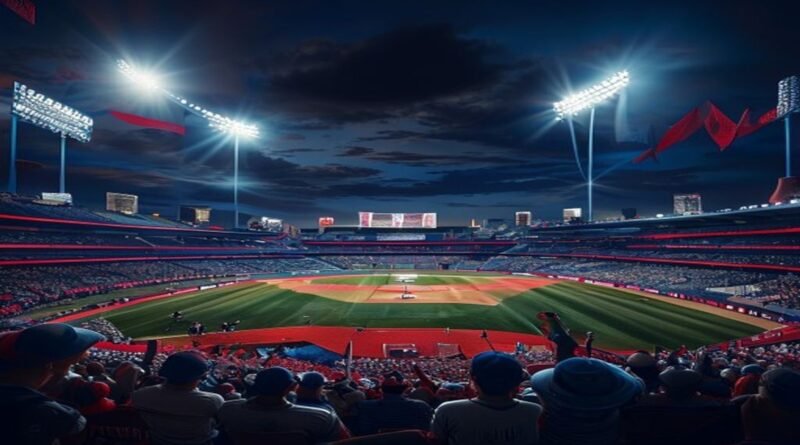
Silent Night in South Philly: How the American League Shut Out Baseball’s Best at the 2026 All-Star Game
For one humid July night in South Philadelphia, the loudest ballpark in America went strangely quiet. The National League’s murderers’ row — Kyle Schwarber leading off, Bryce Harper feeding off his home crowd, Juan Soto lurking in the middle of the order — was supposed to turn the 2026 All-Star Game into a fireworks show. Instead, on July 15 at Citizens Bank Park, the American League’s parade of arms wrote a different story: a 4–0 shutout, the Midsummer Classic’s first since 2013 and, as Bleacher Report noted, only the eighth in the event’s long history.
It was not the script anyone in Philadelphia had rehearsed. ESPN’s pregame panel leaned heavily toward the National League, pointing to the senior circuit’s .547 winning percentage in interleague play this season and an American League roster thinned by injuries to stars like Shohei Ohtani and Aaron Judge. One ESPN analyst went so far as to declare that “the American League simply can’t compete this year.” For nine innings, the American League begged to differ.
First-Inning Lightning
The game was effectively decided before many fans had settled into their seats. Facing Phillies ace Cristopher Sánchez — the hometown starter handed the honor of opening the night — the American League struck for three runs in the top of the first. Cody Bellinger, the New York Yankees outfielder, lined a two-run single to center field, and Ben Rice followed with an RBI single that brought home Bobby Witt Jr. for a 3–0 lead, according to CBS Philadelphia.
Bellinger’s early damage held up as the night’s signature moment, and it earned him the game’s Most Valuable Player award. There is a certain poetry in a Yankee quieting a Philadelphia crowd — this is, after all, a fan base that treats visiting pinstripes as a personal insult — but the veteran’s calm, opposite-field approach in the biggest at-bat of the evening was exactly the kind of baseball that travels well anywhere.
An Assembly Line of Arms
If Bellinger provided the headline, the American League’s pitching staff provided the substance. Starter Dylan Cease set the tone by striking out the side in the first inning, and from there the AL rolled out eleven pitchers who combined to allow just three hits — singles by Juan Soto, Pete Crow-Armstrong and Otto Lopez — with no National League runner advancing past first base all night, per CBS Philadelphia.
The strikeout totals told the story of modern baseball in miniature: 27 combined punchouts between the two sides, 15 of them recorded by American League arms. And yet, in a twist that cut against the sport’s velocity obsession, CBS Philadelphia reported that only six pitches all night exceeded 100 miles per hour — the fewest in an All-Star Game since 2021. This was not brute force. It was craft: changeups that died at the plate, sliders that started in the zone and finished in the dirt, and a parade of relievers who each treated their single inning like a Game 7.
A Birthday Party for America, a Quiet Night for the NL
The evening carried civic weight beyond the box score. Philadelphia is spending 2026 celebrating the nation’s 250th birthday, and the ballpark leaned into the occasion with Liberty Bell replicas and patriotic ceremonies woven through the night, CBS Philadelphia reported. The city that hosted the signing of the Declaration of Independence got its Midsummer Classic in the Semiquincentennial summer — it just didn’t get the ending it wanted.
The National League’s lineup, on paper one of the deepest in recent All-Star memory, simply never solved the relay of American League arms. Miguel Vargas of the Chicago White Sox added the final insult with a towering solo home run late in the game — measured at 433 feet by Bleacher Report — to stretch the lead to 4–0.
There were smaller stories tucked inside the shutout, too. Mike Trout, playing in his first All-Star Game since 2019 after years of injuries, went 0-for-3 in a return that felt meaningful regardless of the stat line. And there was a scare in the third inning when Tampa Bay’s Junior Caminero was hit by a pitch on the hand; X-rays came back negative, and the young slugger stayed in the game.
What the Shutout Says About the Season’s Second Half
All-Star results are famously unreliable predictors — exhibition baseball rewards whoever’s bullpen happens to be hottest for one night. But the shape of this game echoed a real trend in the sport: run-scoring has become a war of attrition against increasingly specialized pitching, and even a lineup stacked with MVPs can be silenced by a fresh arm every inning.
- The American League improved to 49–45–2 all-time in All-Star competition, per CBS Philadelphia — its 18th win in the last 23 editions.
- The three-hit shutout was the first in the event since 2013 and just the eighth ever, per Bleacher Report.
- Jordan Walker, who won the Home Run Derby earlier in the week according to ESPN, couldn’t carry that power into the game itself — nobody in an NL uniform could.
The Lasting Image
Every All-Star Game leaves one picture behind. In 2026, it won’t be a home run splashing into the seats or a walk-off celebration. It will be the sight of one of the great offensive gatherings in recent baseball history trudging back to the dugout, inning after inning, while a city primed for a party watched in respectful, slightly stunned silence. Philadelphia threw itself a 250th birthday celebration, and the American League showed up, ate the cake, and left without saying much at all. Sometimes the quietest nights are the ones a sport remembers longest.
